

A four-year absence can always elicit questions from the listener. How will the album sound? What will he speak about? Is he not feeling inspired? In Dave’s case, it’s a combination of the above. He’s cultivated a rare audience who do pay attention to lyrics, who do expect conceptual songs, who won’t shuffle an album, who don’t mind a 9-minute song from start to finish. It indirectly creates a “high art” perception. And when the artist themself is aware of that perception, it becomes increasingly hard to not become a caricature of your sincerity.
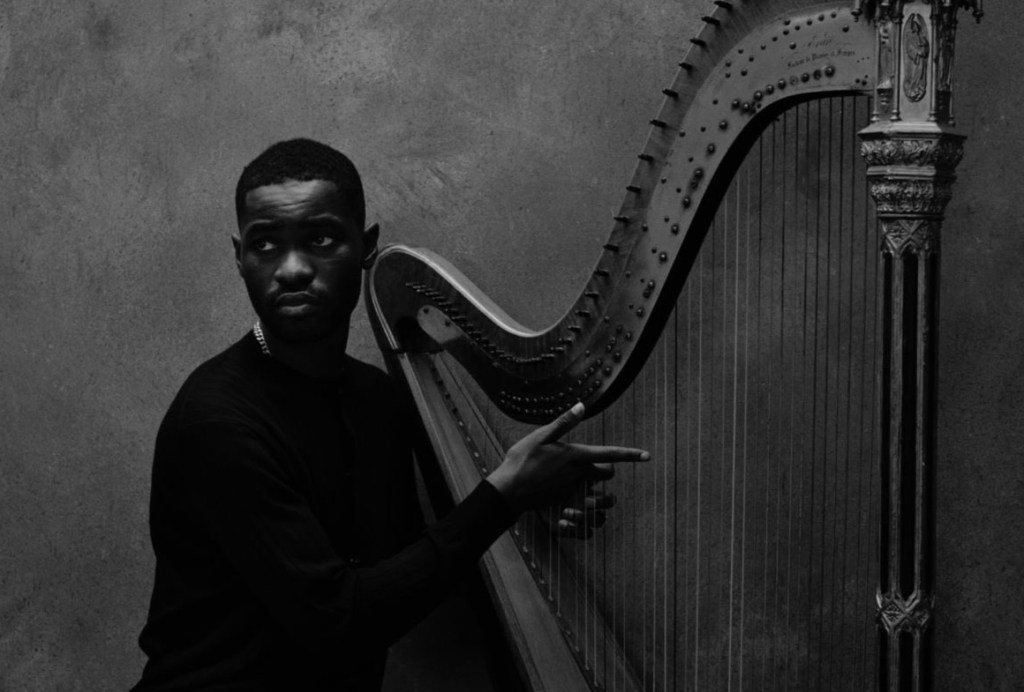
My “crucial third album” statement is a bit of an inside meme at this point. But is it not true? They say third time’s the charm. Hattricks are better than braces. “Best three-track run” discussions. It’s a chance to rectify missteps from sophomore efforts. All true rap GOATs have those stripes. If Dave is one, he can pass the litmus test and hit a new peak of creativity.
Creativity is often key for that third album. By now you’ve cultivated that loyal fanbase, perhaps even gave them more of the same from the debut on the sophomore. Labels give you far more trust and autonomy. In Dave’s case, he doesn’t even have to worry about the final matter. Point being, he can go in any direction he likes.
On the surface, he’s done that in some ways. He subverted industry norms by delivering his thinnest album to date. No lead single was released, and from the final product it’s clear why there wasn’t. No A-list rappers. Minimal promotional campaign outside of the tour, billboards and bundles. So once you open the promising packaging and see what’s inside, what’s he got in store for us?
Production Hold thy Tongue
The Boy Who Played the Harp is sonically sparse. We’re met with the most muted mainstream rap album of the year, consciously leaving out the chance to bop the listener’s head. Backing tracks are often a mere whisper, which works in my favour as a consumer; some of my favourite albums are built on heavy minimalism (Sampha’s Process; Earl Sweatshirt’s IDLSIDGO; Frank Ocean’s Endless). I admire the direction of no Clashes, no Sprinters, no Verdansks. It’s a statement and commitment to the concept in play, which we’ll get into later.
On “My 27th Birthday”, he says the album took four years because he’s “with producers and people that give a damn”. And I’m sure they all do. But four years later, is Dave looking to try new ingredients in the kitchen, or are we the customers being served the signature dish? Which brings me to Dave’s favourite 88 ingredients: the pianos are in full effect for the third album in a row. Tracks 4-7 consecutively feature piano as the backbone of the instrumental, with not much being built around that. When you get that as a listener back to back to back to back, it naturally won’t perk the ears. We get small portions of harp for the album’s namesake, but it’s never at the main-stage. The piano is where Dave feels at home, but at what point does he decide to challenge the listener and himself? On the outside, The Boy Who Played the Harp subverts expectations. Musically, it’s Dave’s usual comfort zone.
The most challenging effort on a production level is “175 Months”. It’s a standard vocal chop, prominent as ever in hip hop tracks, but comparatively it ends up being one of the braver songs out of the 10. Even with this compliment to the song, it’s not a beat that would’ve felt out of place on Psychodrama or We’re All Alone in this Together. So for an artist who prides himself on “the music”, where are the new artistic risks?
At this point James Blake’s become a frequent collaborator; he’s featured twice officially and has production credits on four songs. But I’ve always felt we never get the best of him on a Dave song. Just look at Blake’s solo catalogue and you can’t help but feel the duo are playing it safe. Neutralising one of the best British musicians to mere piano melodies is a concerning choice. Give us a synth or two, guys. Give a dramatic shift. Give something that we can’t expect. All this doesn’t result in the songs feeling forgettable, but nor do they give fireworks either.
Subject Matter Reigns Supreme
Subject matter carries The Boy Who Played the Harp to a PB that the biggest gymbro could only dream of. Back gains all day. Across its 10 tracks, Dave covers his restoration of faith, past relationships, the loss & incarceration of friends, incel culture, political hypocrisies, failures of therapy, and expectations as the King of UK Rap. It’s the most candid we’ve ever heard the South Londoner — going from someone who sheepishly shared stories on Psychodrama to now being comfortable in expressing anything and everything. His words are relatable to plenty 20-somethings, sparking multiple parallels to your own life in a matter of minutes. In an era where some rap fans scream for attention to be paid to subject matter, here is Dave — a rare case of a contemporary artist setting this not as a choice, but as protocol.
But alas, it’s a lot for ten songs. There’s simply not enough time to cover every base in detail, so Dave ends up leaving plenty of these thoughts as a footnote. “Is my music just becoming a depiction of my wealth?”, he wonders on “My 27th Birthday”. There’s poignant self-awareness and analysis in that one line. But it’s… just the one line. The best rappers are able to follow a train of thought for four, six bars, and at the highest level a whole song while lacing through incredible rhyme schemes. Of course, this birthday series is where Dave opts for the stream-of-consciousness verse. But this is the first birthday track that’s landed on a studio album. If it’s going to make up 16% of your album runtime, there has to be a bigger gratification for a freestyle to be making the cut.
Rhetoricals are the crux of BWPH; to both constructive and vapid effect. It’s Dave’s main literary device, throwing away the punchlines in favour for matured, plain-spoken lyricism. The line “I wanna be a good man / But I wanna be myself too” feels like the crux of Dave’s entire mind. He’s admitted he cheats, despite knowing where that lands him on a moral compass. He’s not fully committed to boycotting genocide-funding products despite knowing it’s for the greater cause. Question is, what’s the conclusion to all this? It’s all outlined, but what’s the takeaway from these statements? Imperfection? If that’s it, you’d expect more from someone who’s hailed as one of the greatest songwriters of his generation.
It’s no secret that UK rappers tend to jam-pack words in their lines. Bars are lengthy, sprawling into the next one which can often disrupt the rapper’s flow. “My 27th Birthday” encounters this exact dilemma in its first half, a habit Dave used to practice in the premature years of his career. This ties in tightly with absent flow. Across BWPH, he’s rarely entering flow state, and neglecting rhyme schemes in the process of getting out what he’s saying as plainly as possible. It’s a worrying indication that his rapping on a technical level’s not improved, but stagnated.
Those stuffy flows are also a result of the aforementioned production choices disarming his ability to glide over a beat. The only instance we get of a beefy instrumental, relatively speaking, is “Marvellous” — and you can clearly hear the pockets he’s able to find. Hitting syllables on the percussion, dropping shorter bars, and switching flows with production changes.
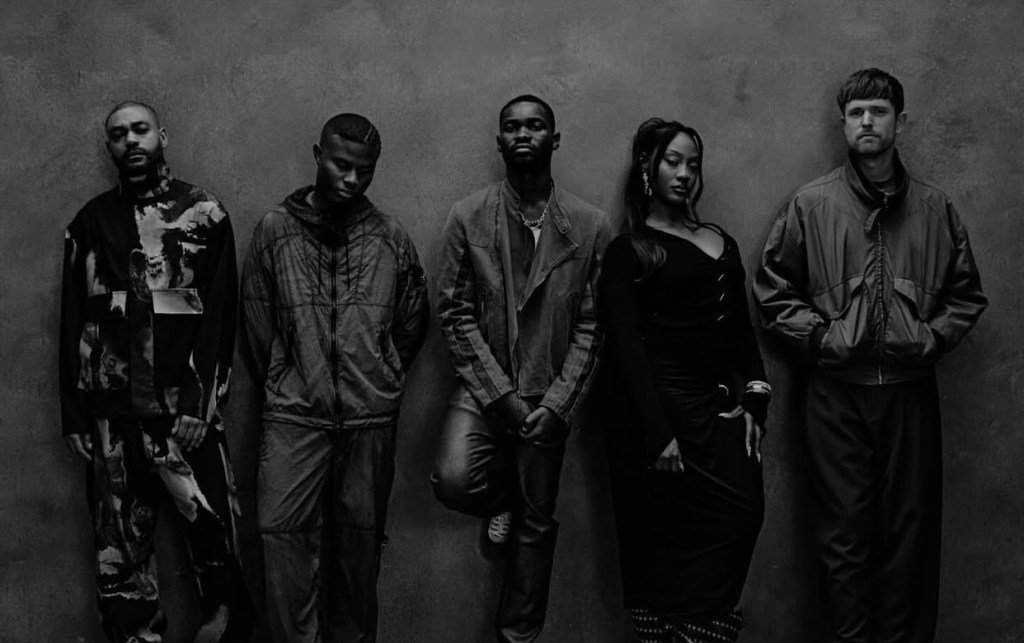
In some moments, Dave does flesh out a theme he’s going for. “Selfish” uses the rhetoricals device to assess his guilt for putting himself first. “Chapter 16” reenacts a conversation between Dave and Kano happening over dinner. “Marvellous” and “Fairchild” follow the stories of siblings Josiah and Tamah, the former incarcerated and the latter victimised by abusive men. This is Dave’s forté, being a bigger storyteller for others than for himself.
As a human being dropping confessionals exactly as Dave feels fit, The Boy Who Played the Harp is fantastic. As an artist and songwriter going for the ‘less is more’ approach, it’s clear the 10-track format is more a hinderance to the album than a benefit. Never thought I’d ever say that a tight tracklist was a bad idea, but in this case, Dave clearly has too much to say to warrant brevity. Hell, the signature lengthy tracks already contradict that aim before even pressing play.
We do like to magnify Dave’s content in UK rap. It’s because there’s not many contemporary rappers covering what he covers. The fixation comes partly because he is good and partly from the lack of other options in his class, because the average rap listener doesn’t explore beyond the mainstream. It’s a similar problem in the States; Kendrick Lamar and J. Cole are applauded for their conscious writing, while Billy Woods and Ka’s arguably superior efforts are swept beneath the underground rug. This isn’t Dave’s fault per se, this is just the nature of music consumption. But it’s at least important to bear in mind when perceiving conscious albums — there can be better conscious rap out there, mainstream stan culture just doesn’t allow it the spotlight.
‘King David’ at the Throne
Dave dances with the Biblical concept that overarches individual tracks. He’s no Diversity with it, but it’s more than a timid two-step. Dave’s both King David and King Saul, the former using music to soothe listeners and the latter serving as the disobedient king of UK rap. The two clash, as noted by the line: “I can’t love myself, I’m made from two people that hate each other.” He’s a hypocrite who disobeys God by not praying & skipping church whilst carrying an inflated ego as the national hero. Subsequent side-stories tie in with this, with “Marvellous” drawing parallels to the young, imperfect King Josiah, and “Fairchild” centred around Josiah’s little sister Tamah, another Biblical parallel where Tamah is the daughter of King David and was abused by half-brother Amnon. Dave makes it clear he also treats Tamah like family to confirm the Biblical reference (“You see, Tamah, she like my little sis'”).
So credit where due, the concept’s weaved in with clear intent. The run of “My 27th Birthday”, “Marvellous” and “Fairchild” all connect sequentially. It’s then tied together by the closing title track, drawing the parallel between King David and himself as musicians whom heal themselves & others through music.
So step in your purpose, speak for your people, share all your secrets
Expose your emotions, you might not see, but there’s people that need it
It’s more effective than most rappers’ concept albums, rather than a flimsy attempt with multiple sidesteps. Even the relationship verses serve as that ‘healing through music’ angle he’s going for. It may not always land musically, but as an objective idea, it’s far from where the album stutters.
“Mum, You’ve Told Me this One Before”
Dave’s world is an expansive one in theory. He brings substance to his songs & projects. While these areas are global, his soundscape is continental (not literally). We saw him duplicate the tried-and-tested Psychodrama formula on We’re All Alone in this Together. Statement intro? Check. “Verdansk” mirroring “Streatham”? Check. Afrobeats crossovers in “Location”, “System” and “Raindance”? Check. Voice notes, mandatory 9+ minute tracks, a gut-punching climax? You see what I’m getting at.
It’s actually a cool checklist. The dealbreaker here is, what’s additive? Let’s callback to my ingredients idea from earlier. The emotional “Fairchild” rehashes the vocal layering + female perspective of “Both Sides of a Smile”. A unique idea initially on “Both Sides of a Smile”. This time round? A replication. There’s also the closing track mirroring the format of 2017’s “Question Time”. Could there have been a new way of conveying the same intent instead? Not that the replication negates the vital message of the songs, but rather a question for artistic packaging.
Dave’s kryptonite also shows up for the third album in a row… love songs. I used to think it was tongue-in-cheek on “Purple Heart”. Then it was corny but cute on “Law of Attraction”. Now it’s “When’s Tems’ part coming on?” for “Raindance”, who’s contribution is the sweetest part of BWPH. I can’t get enough of it, but it takes phasing out Dave’s verses to get there. We had a 20-year-old Dave say “You’re a Gem-n-I ain’t even talkin’ ’bout the star sign” in 2019, which we could’ve put down to juvenility. Now he’s 27 years old saying “Better than Beyoncé, I like the sound of fiancée / You know it’s got a little ring to it”. You’d hope within 7 years that the penmanship on love songs would’ve improved by now, but it continues to be a blindside for both Dave and lyric-revering fans. Truthfully, we’re only shimmying to Tems’ part.
Add that all onto the piano fixations, it’s hard to identify what’s new from Dave musically and technically. It’s groundhog day for the super talented artist.
It’s frustrating, because The Boy Who Played the Harp is far from a tragedy. It takes the second half of “My 27th Birthday” to enter a flow state, saving the song to become the bonafide highlight. “Chapter 16” with Kano is secure but undecorated; meaning it’s a good track but could’ve done with far more engaging production. Hooks from Jim Legxacy and Tems add the few bubbles of melody. “Selfish” is where Dave’s bleak outlooks feel truly devastating. But even in the album’s best moments, it doesn’t light a candle to all-timer Dave songs. They’re all solid songs in their own rights, yet they have their shortcomings, whether they come from the production side, Dave’s writing & rapping, or the repetition of old tricks.
And last but not least, as a writer and commentator in UK rap who’s an avid Dave fan, one can only hope Dave finds this take constructive and not forced. Because it comes not from a place of vitriol, but out of a desire for Dave to be better in the way I know he can be.

The Boy Who Played the Harp is abundantly personal, rich in subject matter and conceptual vision. Though three albums in, it still feels like he’s only getting started with unpacking his introspection. For once in his career, brevity doesn’t work in his favour, offering footnote raps while rehashing musical ideas he’s tried and tested aplenty. Conceptually, Dave’s reached a new creative peak. But sonically, Dave’s reached a creative halt. There’s heart in the harp, but it needs some finetuning.
6.5 / 10
Best tracks: “My 27th Birthday”, “Selfish”, “Chapter 16”


 Mic Cheque